How Do I Build Backlinks for My AI Agency Website?
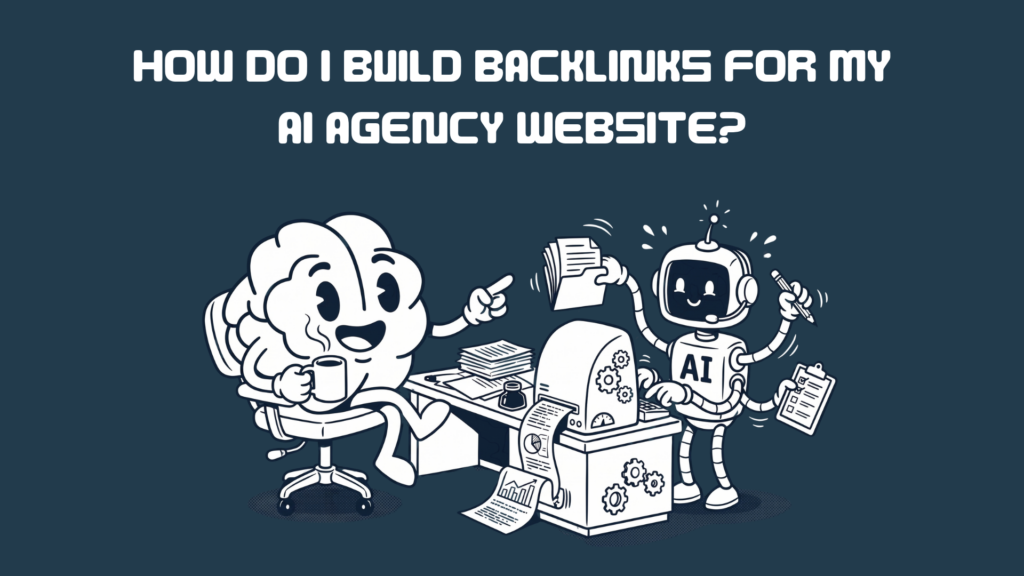
If you want your AI agency website to rank, backlinks should be high on your radar. An artificial intelligence and automation agency is competing against tech news outlets, venture-backed software startups, global consulting firms, and established B2B tech blogs that already have massive authority online.
Your website needs relevant, trustworthy links pointing back to it to signal relevance to Google, ChatGPT, and other search engines. Once those links start building authority, your keyword targeting, on-page SEO, and content strategy will start working for you the way it seems to do for the big guys.
What Types of Businesses Does This AI Agency Guide Cover?
The artificial intelligence sector moves fast, with agencies specializing in everything from custom development to operational workflows. Whether you serve mid-market enterprises or local businesses, this backlink strategy applies to:
- AI Automation & Workflow Agencies: Building custom Zapier, Make, and API integrations to automate internal business operations.
- Custom LLM & AI App Developers: Fine-tuning open-source AI models, building custom GPTs, and creating tailored enterprise chatbots.
- AI Implementation & Strategy Consultants: Helping organizations adopt generative AI tools, navigate compliance, and train workforce teams.
- Computer Vision & Predictive Analytics Providers: Developing specialized machine learning models for retail, manufacturing, logistics, and healthcare.
- AI Search & Content Optimization Studios: Helping brands optimize for AI answer engines (GEO/AIO) and modern search paradigms.
Off-Page SEO - Link Building Strategies
Use Backlink Brain to Find AI & Tech Link Opportunities
If you want a faster way to build backlinks for your AI agency site, Backlink Brain should be part of the process.
Instead of manually digging through search results, tech magazines, SaaS blogs, business efficiency publications, and outreach targets one by one, you can use Backlink Brain to find sites that actually make sense for an AI agency. That could include enterprise tech portals, B2B software directories, productivity publications, industry-specific trade blogs, and digital transformation sites where a backlink fits naturally.
Guest Blogging on B2B, SaaS, and Business Efficiency Websites
Writing guest posts for established sites in business and technology is one of the most reliable ways to build backlinks. Contributing an article on how custom LLMs streamline customer support to a SaaS publication, or sharing workflow automation blueprints on an enterprise management blog, not only sends warm leads your way but also signals to search engines that your agency is an industry leader.
Releasing Open-Source AI Prompts, Scripts, and Automation Templates
The developer and tech community thrives on open-source resources. Creating free, downloadable assets, such as custom Python scripts, specialized prompt libraries, or pre-built automation blueprints, and sharing them on platforms like GitHub, Reddit, and specialized tech forums can generate organic backlink pickup from bloggers and developers referencing your tools.
Getting Featured in AI Tool Directories and Software Marketplaces
Submitting your agency's proprietary tools, custom GPTs, or client solutions to curated AI directories (such as Futurepedia, Product Hunt, and AI landscape aggregators) helps build immediate foundational links. Combined with listings on B2B agency review platforms like Clutch and GoodFirms, these citations boost domain rating while building referral traffic.
On-Page SEO: Beyond Backlink Building
The Basics
Once you know what to write about, the next step is making sure your content is properly optimized. On-page SEO helps search engines understand your agency blog while keeping it engaging for technical decision-makers.
Optimizing Titles, Headings, and Meta Descriptions
Your titles and headings should be clear, keyword-targeted, and benefit-focused. Upgrade a generic headline like "AI Services" into something actionable like "How Custom LLM Integration Reduces Enterprise Support Overhead." Meta descriptions should clearly summarize the value of the article while encouraging clicks with a strong call to action.
Internal Linking for Building Authority in Artificial Intelligence Topics
Internal links connect your technical articles to core service offerings. For example, a blog post discussing AI agent architectures should link directly to your custom developer service page or a case study on workflow automation. This helps readers navigate your technical expertise and signals topical depth to search engines.
Code and Diagram SEO for Explaining Technical Architecture
Visual representations of AI pipelines and data flows are essential for building trust with enterprise CTOs and IT directors. Use clear, descriptive ALT text on architecture diagrams, such as "diagram showing API flow between custom LLM and CRM database." If you share code snippets, format them clearly with HTML code blocks so search engines index the technical relevance.
Content Creation Tips for Higher Ranking
Content still matters, even in a backlink-focused strategy. Once your AI agency blog starts earning stronger links, you need authoritative, well-researched articles for those links to power up. Since prospective clients care about ROI, privacy, and speed, your blog should deliver clear proof of concept.
Writing Proof-of-Concept Case Studies with Measurable Metrics
Decision-makers care about time saved and revenue generated. Craft case studies detailing exact client outcomes, such as how an automated invoice processing pipeline reduced manual data entry by 80% or how a custom chatbot boosted conversion rates. Detailed, data-rich case studies frequently earn natural links from writers researching AI ROI statistics.
Covering Cutting-Edge Industry Shifts and Model Benchmarks
AI moves rapidly, and search engines reward fresh, relevant information. Publishing breakdown analyses on major model releases, AI security frameworks, or industry-specific compliance requirements positions your agency as an early authority on emerging tech trends.
Building Interactive ROI Calculators and Automation Grids
Interactive content keeps visitors on your page longer, which boosts user engagement metrics. A simple embedded tool that allows business owners to calculate how many hours their team could save with workflow automation acts as both a lead magnet and an linkable asset that other blogs will gladly link to as a reference tool.
Tracking and Measuring Your SEO Progress
SEO is an ongoing process. To keep your AI agency ranking ahead of competitors, you need to track performance and adjust your strategy based on real metrics.
Using Google Analytics and Search Console to Monitor Rankings
Google Analytics helps you track organic traffic and user engagement, while Google Search Console highlights which high-intent queries (like "B2B automation agency" or "enterprise AI consultant") are driving impressions. Keep an eye on bounce rates and conversion paths to ensure your traffic is turning into booked strategy calls.
Adjusting Your Strategy Based on Traffic and Engagement Metrics
If technical posts about API integrations are drawing high traffic while general AI trend posts lag, pivot your focus toward deep-dive technical tutorials and integration guides. Revisit older posts to update references to newer AI models or frameworks, ensuring your content remains relevant and authoritative over time.
Wrapping It Up: Key Takeaways for Building Backlinks and Improving Rankings
High-intent keywords won't rank on content alone when you're competing against enterprise tech portals and VC-backed startups. Securing high-yield backlinks through guest posts, open-source automation scripts, and software directories is what actually moves the needle. Instead of wasting hours manually hunting for outreach opportunities, use Backlink Brain to instantly surface vetted, high-authority link targets tailored to your AI agency. Claim your listings, build your authority, and start scaling your organic pipeline today.